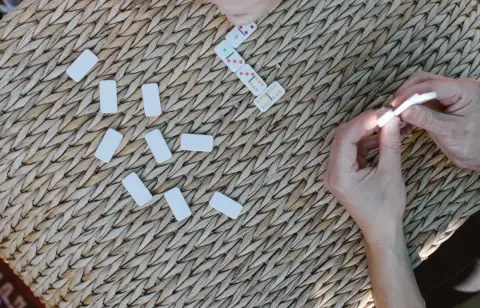
Table culture
Domino Words in Dominican Speech
Dominicans trancan negotiations, move their fichas and call some people una ficha conocida. Here is what those domino words mean off the table.
4 min read
Published October 15, 2026
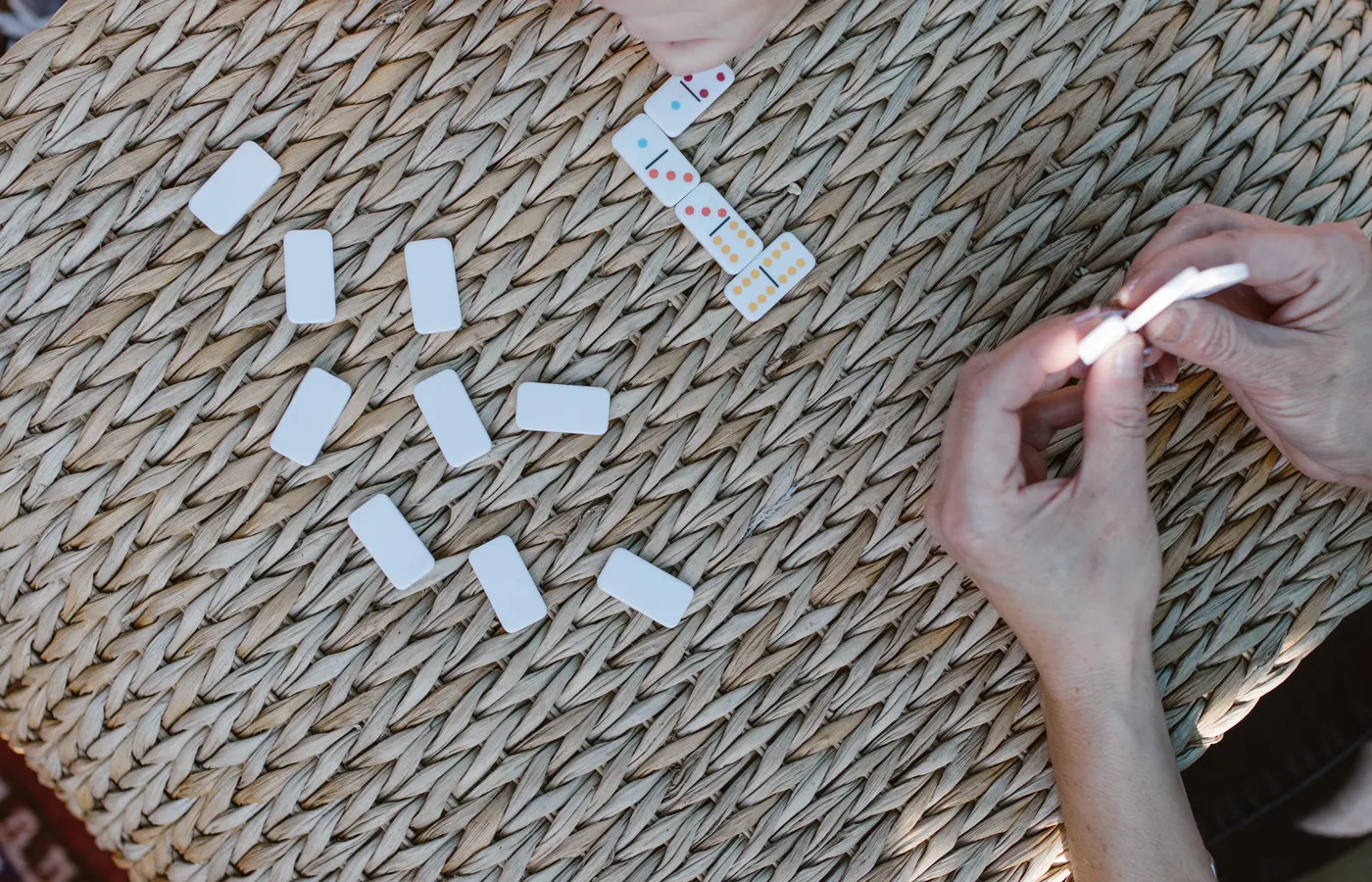
Quick answer
Which domino words Dominicans use outside the game
Trancar a negotiation means blocking it; a tranque is a problem with no visible solution; mover sus fichas is placing people in positions; being una ficha conocida is not a compliment; pasar con ficha means playing dumb; and capicúa can mean a doubtful deal or a trick question.
Jump to a section
Domino is played at so many Dominican tables that its words have walked off them. You hear them in politics, at work and in the news. Here are the ones that dictionaries and Dominican columnists have written down, and what each means away from the game.
01.
Trancar and tranque
At the table, trancar means closing the game on purpose so the tantos get counted. The linguist Roberto Guzmán explains it in his Acento columns on "Dominó" and "Tranque".
Off the table the same words describe politics and business. A negotiation gets trancada when nobody can move. Guzmán's "Tranque" column records tranque as a problem with no visible solution, a use he finds in both the Dominican Republic and Puerto Rico.
In FichaFlow, a tranque ends the hand and the count is done for you.
02.
Mover sus fichas and una ficha conocida
Guzmán in Acento and the columnist Aníbal de Castro in Diario Libre both write about domino words in Dominican political talk. Someone who mueve sus fichas is placing people in positions.
And if someone calls a person una ficha conocida, a known tile, it is not a compliment.
03.
Pasar con ficha
At the table, passing while you hold a tile that fits is a foul, and tables punish it. An El Inmobiliario feature on Dominican domino carries the rule in its title: aquí no se pasa con fichas.
In speech it means something else. Guzmán records pasar con ficha as pretending to be a fool, playing dumb.
04.
Capicúa, on and off the table
At the table, capicúa is going out on a tile that fits both ends. The Diccionario de americanismos of the Association of Spanish Language Academies (ASALE) records that sense in Panama, Cuba and the Dominican Republic.
The same dictionary gives Dominican senses away from the game: a doubtful deal, a risky proposition and a trick question.
05.
"Repite, mata y cuadra" and chercha
A 2020 column in the Dominican outlet Resumen Turismo is titled "Repite, mata y cuadra, como en dominó" and says the phrase is used in the popular game. A visitors' guide on the Colonial Zone DR site also lists repite and mata among table words. Those are the only two sources we found, so treat it as a saying some tables use.
One more word that is not from domino but often comes with it: chercha. The Diccionario de americanismos records it for the Dominican Republic and Venezuela as noisy talk mixed with jokes and teasing.
Bring this to the table
→
Trancar and tranque: at the table, closing the game to count; in speech, a blocked deal or a problem with no way out.
→
Mover sus fichas means placing people in positions; ser una ficha conocida is not praise.
→
Pasar con ficha is a foul at the table and, in speech, pretending to be a fool.
→
Capicúa has Dominican senses off the table: a doubtful deal, a risky proposition, a trick question.
Questions from the table
What does tranque mean outside domino?
A problem with no visible solution, according to the linguist Roberto Guzmán, who finds the use in the Dominican Republic and Puerto Rico. A blocked negotiation is said to be trancada.
What does pasar con ficha mean?
At the table, passing while holding a tile that fits, which is a foul. In speech, pretending to be a fool.
Does capicúa mean anything outside the game?
Yes. The Diccionario de americanismos gives Dominican senses such as a doubtful deal, a risky proposition and a trick question.
Is "una ficha conocida" a compliment?
No. Calling someone una ficha conocida is not praise.
Where this comes from
Want to check the details? These are the references we used.
- Dominó (Roberto Guzmán, De palabra en palabra)
Acento · Accessed October 15, 2026
Roberto Guzmán explains trancar, mover sus fichas, ficha conocida and pasar con ficha as pretending to be a fool.
- Tranque (Roberto Guzmán, De palabra en palabra)
Acento · Accessed October 15, 2026
Records tranque as a problem with no visible solution, used in the Dominican Republic and Puerto Rico.
- La república de las fichas (Aníbal de Castro)
Diario Libre · Accessed October 15, 2026
Aníbal de Castro's column on domino words in Dominican political and everyday talk.
- La tradición del dominó: Porque aquí no se pasa con fichas
El Inmobiliario · Accessed October 15, 2026
A feature on Dominican tables whose title states the rule against passing with a playable tile.
- Capicúa: Diccionario de americanismos
ASALE · Accessed October 15, 2026
Defines capicúa at the table and its Dominican senses of a doubtful deal, a risky proposition and a trick question.
- Repite, mata y cuadra, como en dominó (Manuel Quiterio Cedeño)
Resumen Turismo · Accessed October 15, 2026
A 2020 Dominican column that says the phrase repite, mata y cuadra is used in domino.
- Dominoes
Colonial Zone DR · Accessed October 15, 2026
An expat guide that lists repite and mata among the words heard at the table.
- Chercha: Diccionario de americanismos
ASALE · Accessed October 15, 2026
Records chercha in the Dominican Republic and Venezuela as noisy talk with jokes and teasing.